

Connect MT5
Prepare your accounts, connect one demo MT5 account with Edge and confirm its License ID.
Connect one demo MT5 account using PineConnector Edge. Prepare the details below, then complete the connection steps on this page. You will test message delivery and a demo order in the next stage.
What you need
Section titled “What you need”| Have ready | Where to get it |
|---|---|
| PineConnector access | Sign in to the Portal. You need an active Core, Plus or Pro plan with an available connection. |
| Demo MT5 account details | Your broker supplies the account number, trading password and exact server name. Check that the account permits your intended automated trading. |
| TradingView webhook access | Your TradingView plan must include webhooks, and two-factor authentication must be enabled. You will use this in the test stage. |
Keep your broker login separate from your PineConnector login. The connection steps below show where to find the License ID used in alert messages. Never put a broker password in an alert.
You do not need an invitation or a place on an access list to subscribe to Edge. New accounts show No Active Plan until a subscription is purchased; signup does not start an automatic trial. If you have a legacy subscription, check its Edge access in Portal before connecting an account.
Check compatibility before connecting
Section titled “Check compatibility before connecting”- Exact MT5 server: find your account’s full server name in the Edge server directory. Portal’s live Broker Server Name selector is the final availability check. A similar name is not a substitute.
- MT5 and PineConnector only: Edge runs MT5 with the PineConnector EA, not MT4 or third-party EAs.
- Configurable hosted settings: review and change the EA configuration in Edge → instance → EA Settings. Applying changes restarts the terminal; the confirmation estimates approximately one minute without signal execution.
- Prefer your own terminal? Choose self-hosted MT5 or a Windows VPS if you need another EA or control of your Windows environment. You manage that environment yourself.
You do not need to read every Edge reference view before setup. Continue when you can sign in to Portal, have the demo account’s trading credentials and know the exact supported server.
Watch the Edge setup walkthrough
Section titled “Watch the Edge setup walkthrough”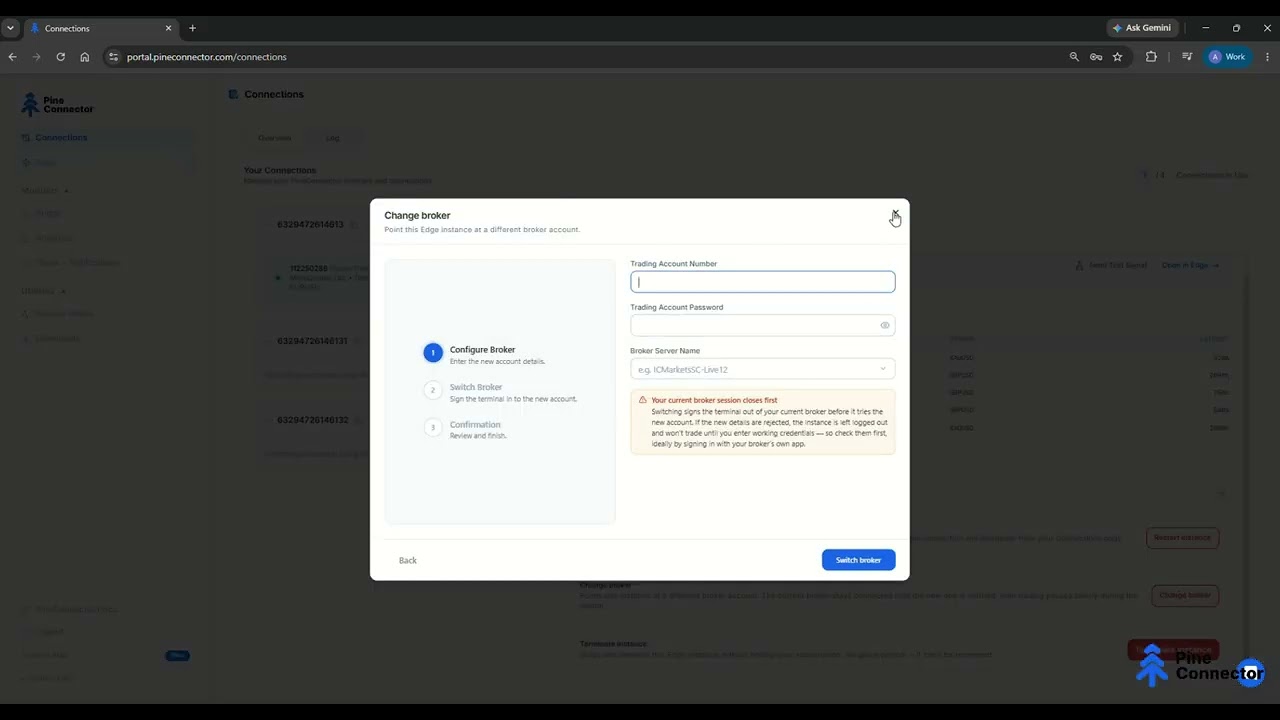
PineConnector Edge — setup walkthrough
1. Add an instance
Section titled “1. Add an instance”- Sign in to PineConnector Portal and open Edge.
- Select Add Instance. You may see it in the top-right corner or as a card in the instance list.
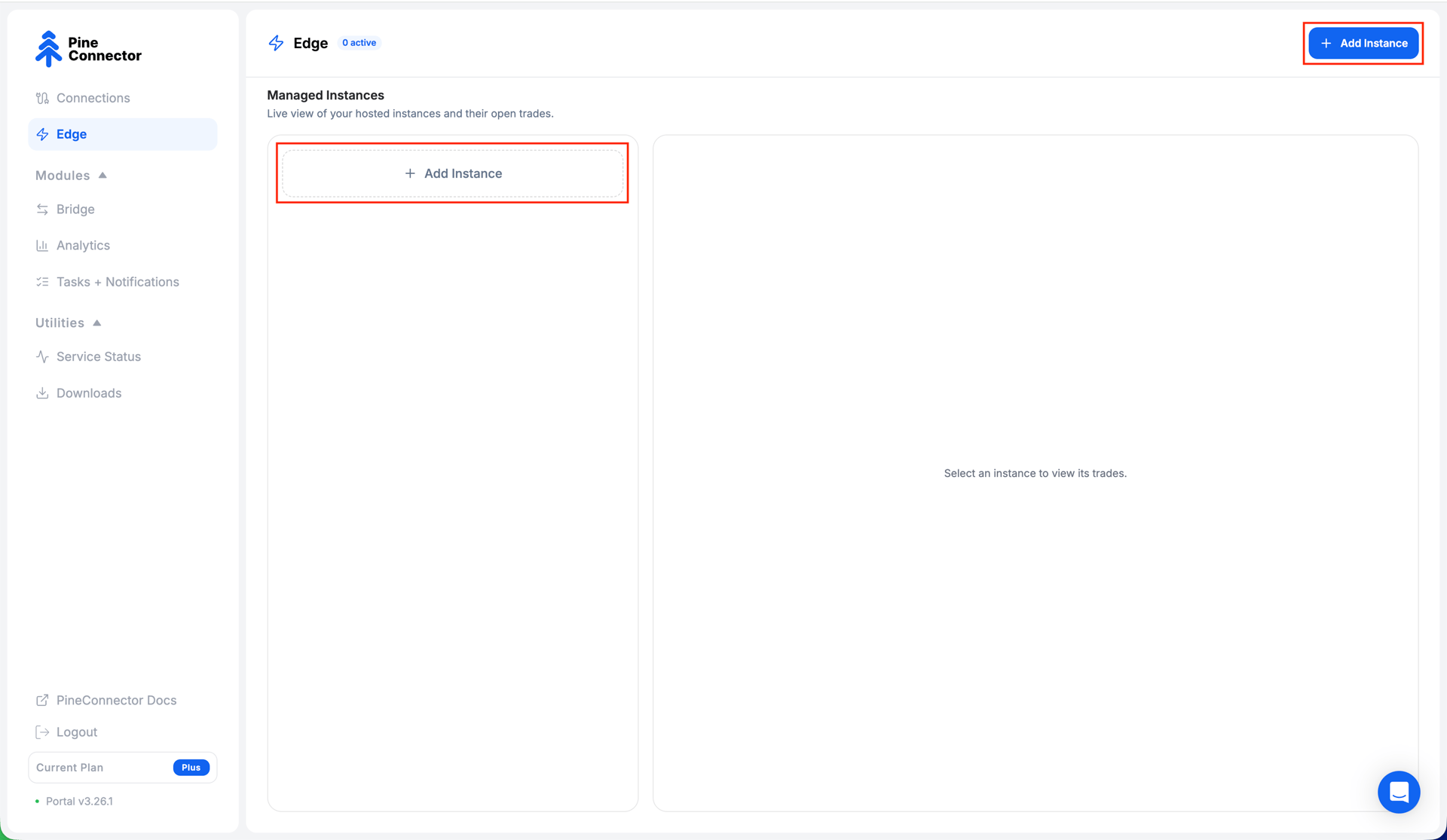
Next screen: Select a license. Choose which License ID this account will receive messages through.
2. Choose your License ID
Section titled “2. Choose your License ID”Decide which accounts should receive the same alerts before choosing an ID. Every account connected to that ID receives its messages; use a separate ID for this demo account if its alerts should stay separate.
An alert addressed to a License ID goes to every account connected to that ID. It does not select only the account you are viewing in Portal.
- Intended recipients
- Account 1
- Account 2
- Outside this ID
- Account 3
- Intended recipients
- Account 3
- Outside this ID
- Account 1
- Account 2
Illustration only. No alert is sent.
ID A → account 1 and account 2. These two accounts receive the alerts addressed to ID A. Account 3 is outside this ID.
ID B → account 3. This account receives the alerts addressed to ID B. Accounts 1 and 2 are outside this ID.
A and B are labels, not usable License IDs. Routing shows the intended recipients; each account still has its own broker result.
Share an ID when accounts should follow the same signals, such as running one strategy on two accounts. Check each account’s symbol, sizing and trading result.
Use separate IDs when accounts should receive different signals, such as keeping a demo experiment separate from another setup.
Three accounts running together still need three available instances. Grouping accounts under an ID does not add capacity to your plan. Check your allocation in Connections.
Check allowances and multi-account setupBack in Portal: connect your demo account:
- In Select a license, choose the License ID you want this account to use.
- Select Next Step to continue to the broker details.
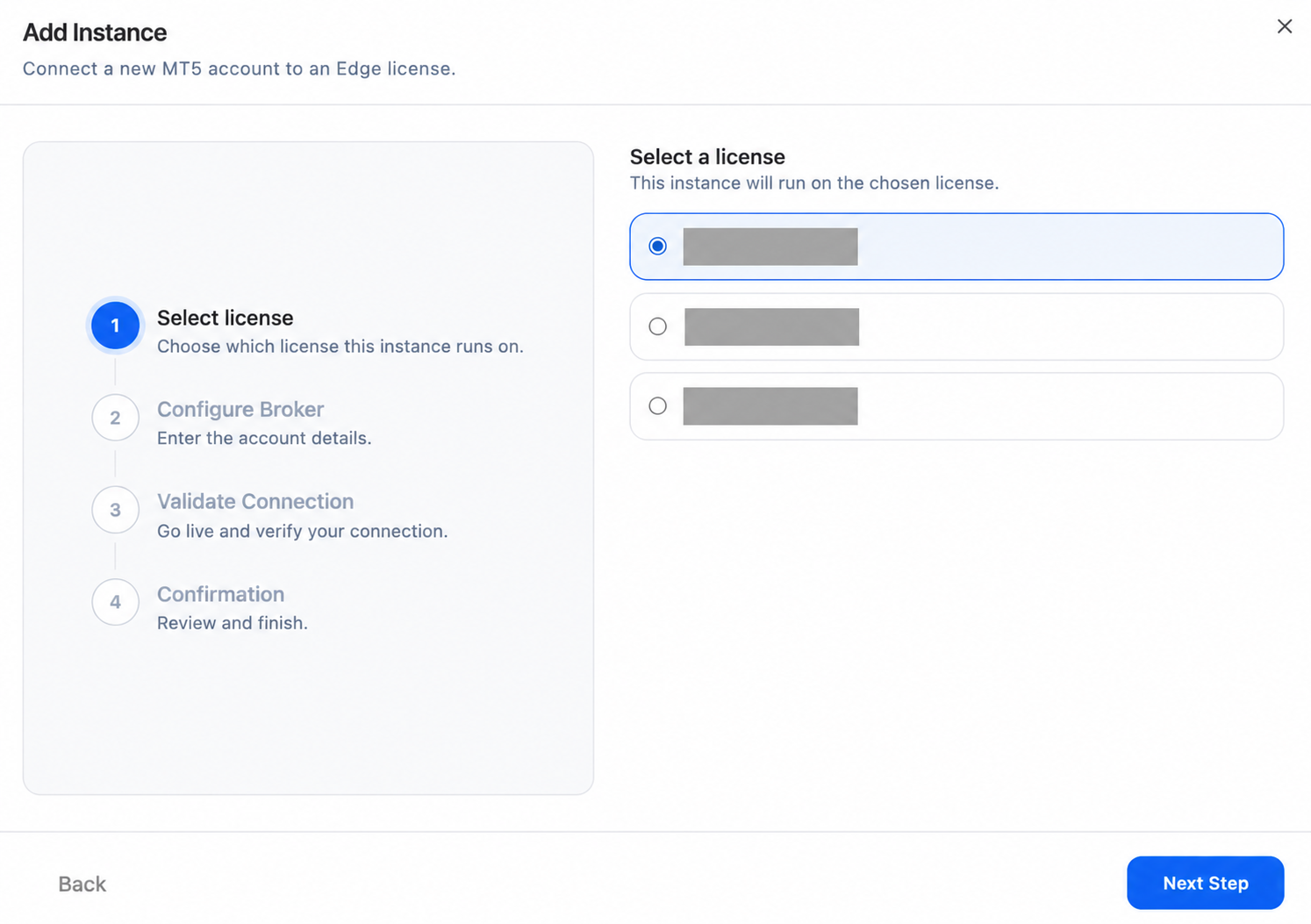
If no licence or connection is available, check Connections and your instance allowance. Edge and self-hosted accounts share the plan’s connection allowance. Do not disconnect a running account just to make room without reviewing its automation.
Next screen: Configure Broker. Have the demo account’s broker details ready.
3. Enter your broker details
Section titled “3. Enter your broker details”Fill in the Configure Broker screen:
| Field | What to enter |
|---|---|
| Connection Name | A label you will recognise later, such as the broker plus “Demo”. |
| Trading Account Number | Your MT5 account login supplied by the broker. |
| Trading Account Password | The trading password for that MT5 account, not its read-only investor password. |
| Broker Server Name | The exact server assigned to the account. Select a matching result from Portal’s list; an unlisted name cannot be entered as a substitute. |
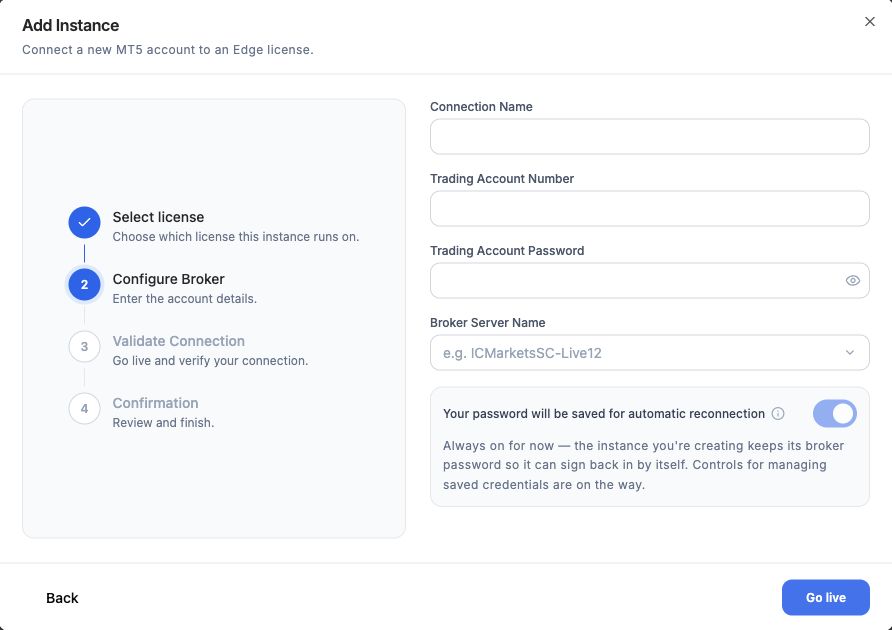
Check the account number and server together, then review the password-saving notice shown in Portal. Edge needs these details to sign the hosted terminal in to your broker.
If your server is missing, search the supported-server directory or ask Support. Use Portal’s current selector as the final check; do not substitute a similar server name.
Before selecting Go live: confirm that this is the demo account and License ID you intend to connect. Then select Go live once.
4. Wait for setup and confirm
Section titled “4. Wait for setup and confirm”Edge prepares the hosted terminal and signs in to the broker. Setup is estimated to take around two minutes; follow the actual progress on screen rather than a fixed deadline.
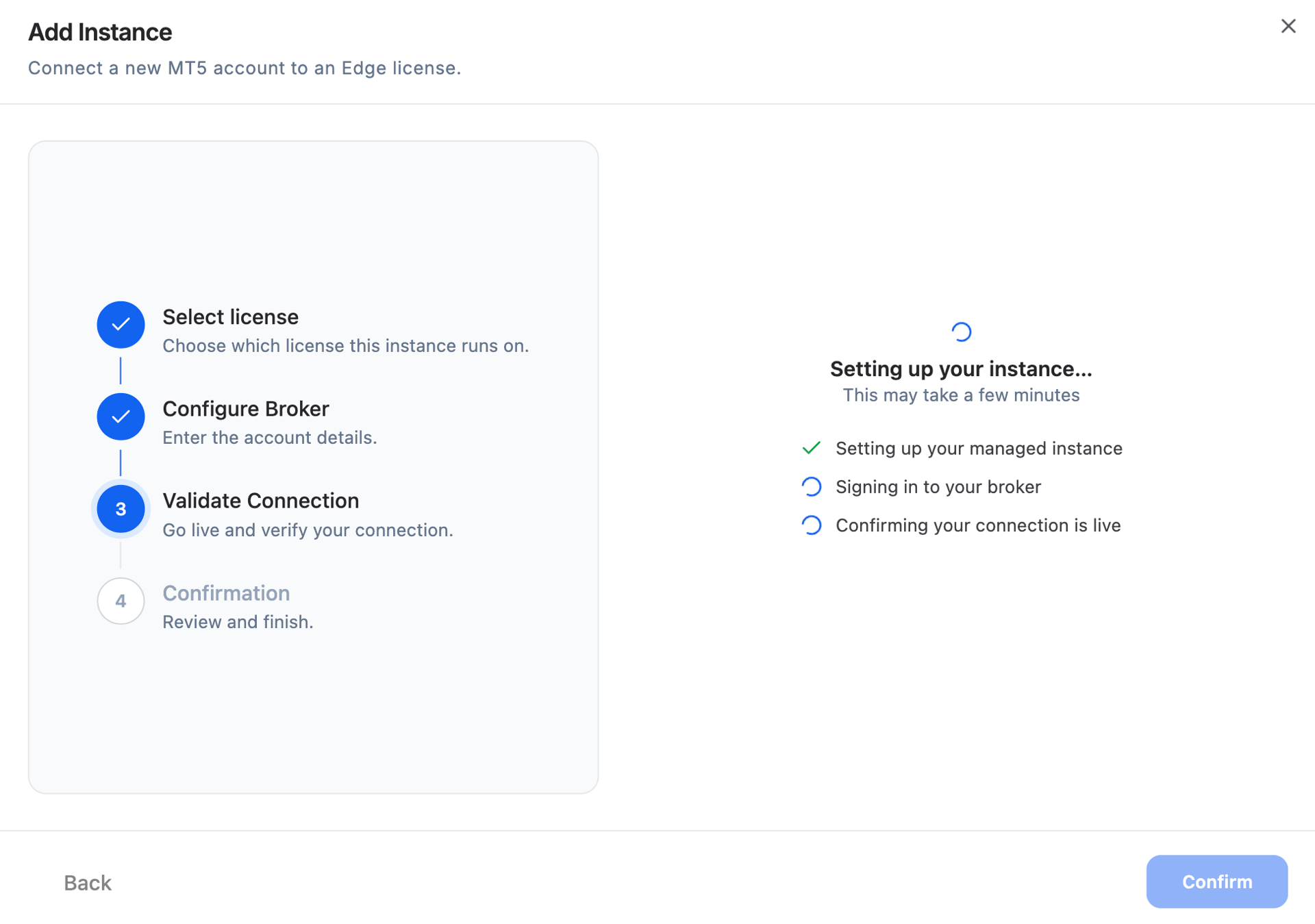
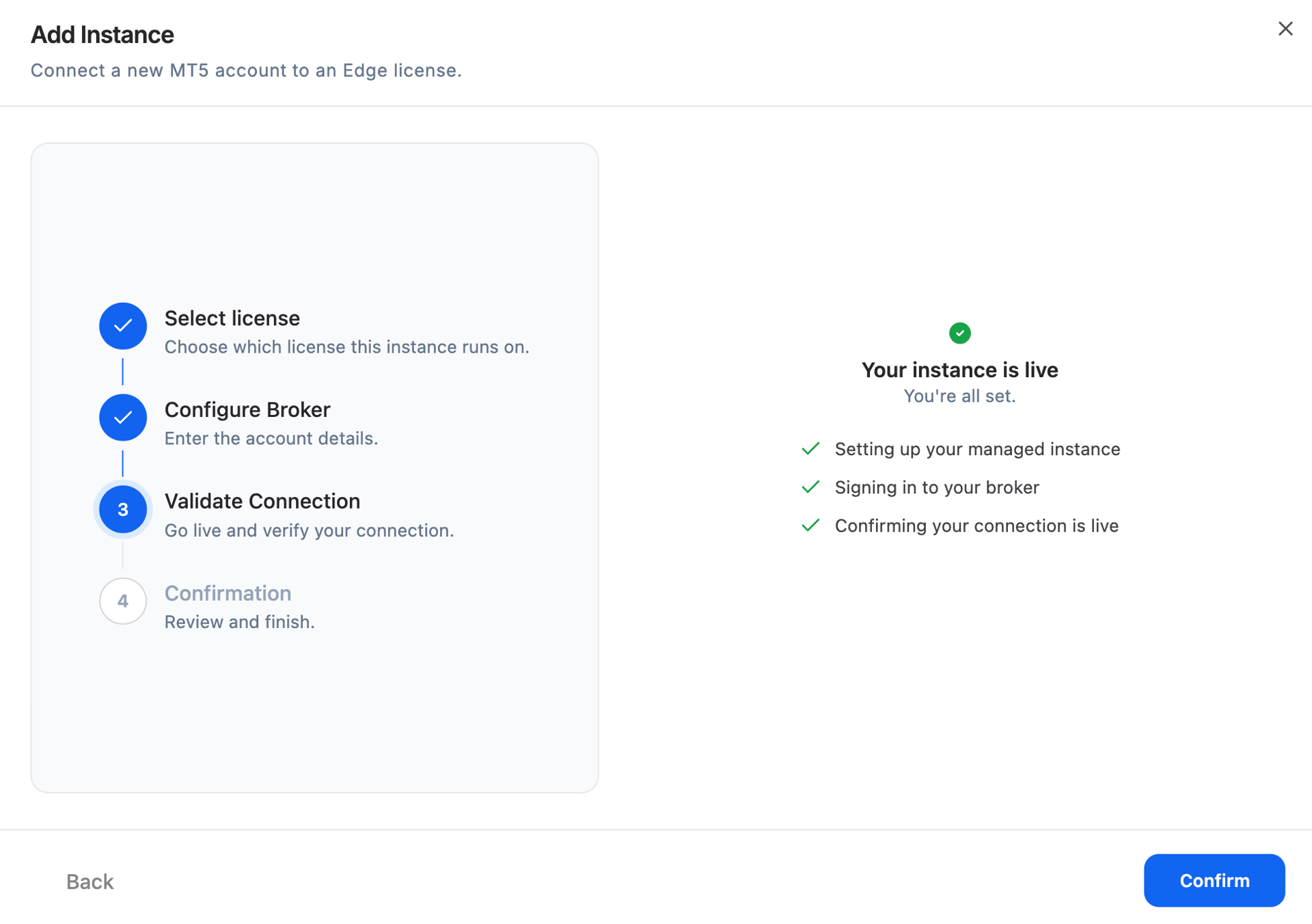
When you see Your instance is live and the setup checks have completed, select Confirm.
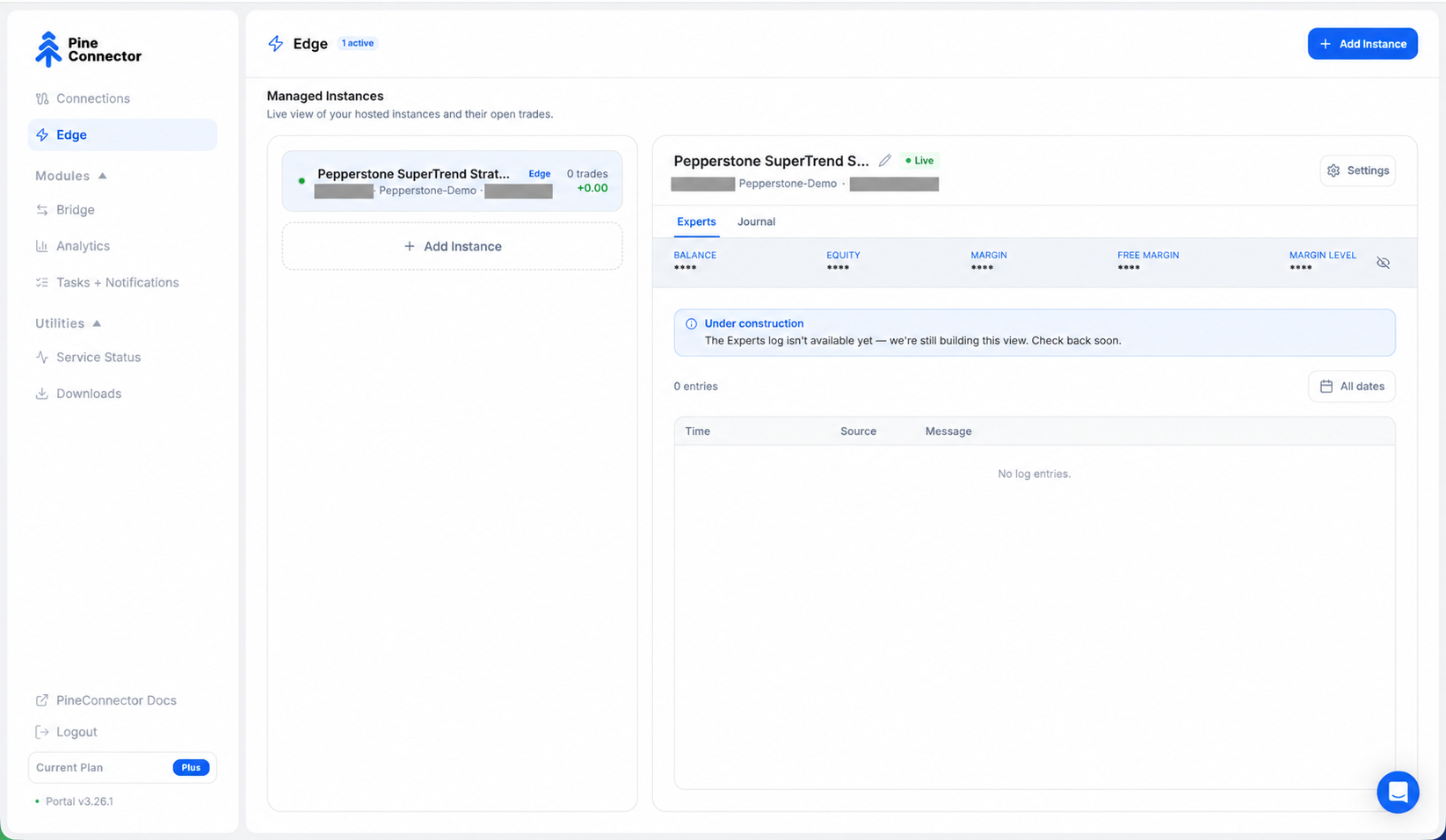
The instance should now appear on Edge. Select it and check that its connection name and broker match the account you intended.
If setup reports a problem, read that result and recheck the broker login, password and server. Contact Support if it remains unresolved instead of repeatedly adding instances.
Copy the ID for the next stage
Section titled “Copy the ID for the next stage”- Open Connections.
- Find the account you just connected and confirm the broker, demo account and Edge tag.
- Use the copy icon beside its License ID. Keep this ID for the test stage.
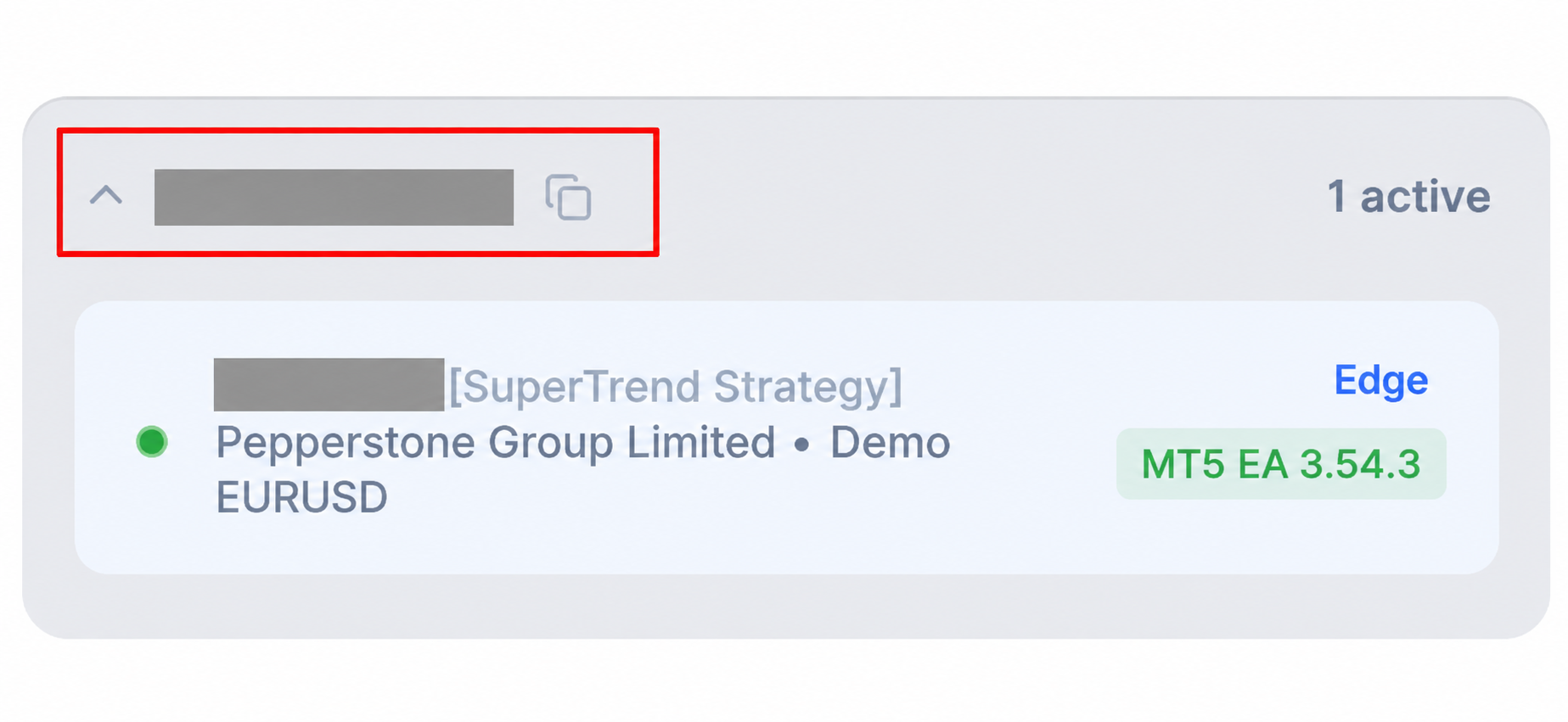
Current IDs are normally 13–14 digits. 1234567890123 is a made-up 13-digit example, not an ID to use. Some legacy IDs have a different length; copy the value in Portal unchanged.
Before the test stage, check:
- The intended demo account is connected.
- Its broker and Edge tag match.
- You have copied the License ID assigned to that account.
The next page checks message delivery and an actual demo order.
Need a different setup?
Edge hosts MT5 with the PineConnector EA. If you need another EA or control of your own Windows terminal, choose self-hosted MT5 on a supported computer or Windows VPS. This is an optional path for users who manage their own environment.
Older subscriptions may have different Edge access. Check the account allowance FAQ or your Portal before continuing.